

This one is back by popular demand. I posted it here about a year ago when there was only a handful of subscribers. But it is truly worth pondering when it comes to man made foods. I added some graphics to further illustrate the point.

With chronic disease rates, specifically T2D, obesity and heart disease reaching unsustainable levels across the globe the attempt to consume low fat and low cholesterol foods has not stemmed the tide. The used of medications has also failed to reduce this burden. Therefore an inquisitive eye must be turned to environmental factors which include major alterations in the human food supply. The introductions of industrial trans fats and seed oils through processes like hydrogenation both represent a complete shift in consumption away from natural animal fats and towards man-made fats once unavailable to humans. It is possible that this nutritional intervention is actually a contributor to the diseases of modern man through unique mechanisms of remodeling mitochondrial membrane structures making them less efficient rather than being a healthier alternative as we have been led to believe.
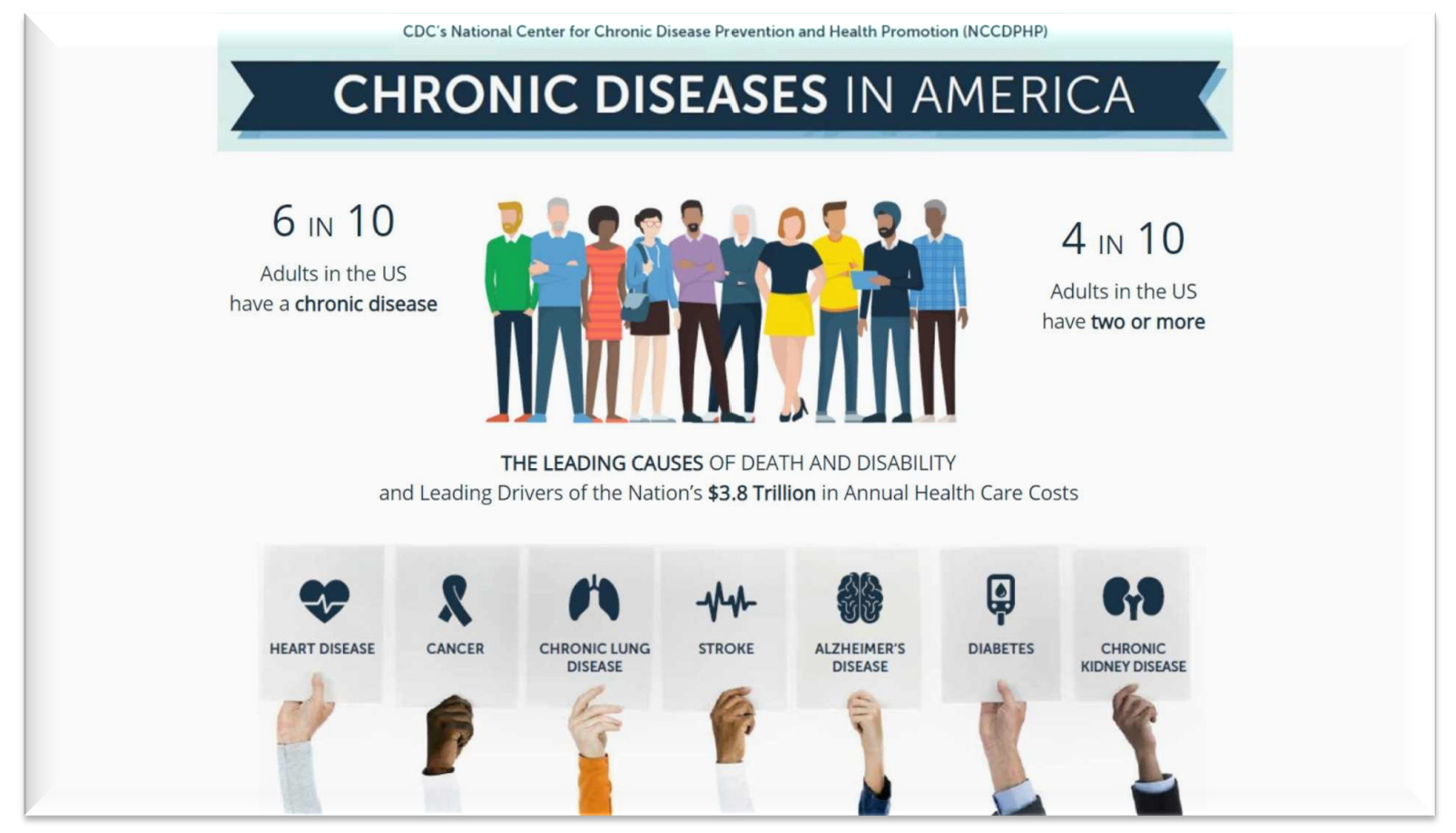
Chronic disease in America is so pervasive that to an extent we have become desensitized. Six in ten adults suffer one chronic disease and four in ten suffer from two or more.(1) This problem is everywhere you turn. You cannot go out to a store or attend a party or even walk down the street any longer without running in to one of these statistics. To make matters even worse the cost of healthcare in this country is reaching an unsustainable level. 3.5 trillion dollars is spend on healthcare in the U.S. each year and 90% of that 3.5 trillion is spent on chronic disease. My question to the public is why do we accept this as a natural part of human evolution? Why do we expect to suffer chronic disease? Is it inevitable? Do we have a choice?
I think to answer this question we need to explore a time not so long ago when the most common chronic diseases were far less common or even unheard of. I want to take a look back at the city of Boston in the 19th century. Not just because I happen to be from there but also because there are some very well kept records. In this amazing piece of history called the Bill of Mortality from the year 1811 it shows that there were no recorded deaths from heart disease and only five from cancer.(2) In fact in the entire 19th century there were 8 reported heart attack deaths worldwide and the first was published in 1912 by Dr John Herrick in JAMA.(3) And yet by the year 2010, 32.5% or one in three deaths are due to coronary heart disease. Cancer, obesity and type 2 diabetes all follow this same disturbing trend. What changed so significantly during this time period? It was the human food environment that changed. The advent of the main three ingredients that make up processed food were introduced in a matter of 90 years, the blink of an eye in terms of biology and evolution. Sugar was refined in 1822, roller mill technology created refined wheat(carbohydrates) in 1880 and the first hydrogenated trans-fat, Crisco, was introduced in 1911.4 Soon after Crisco came a host of liquid industrial seed “vegetable” oils in the polyunsaturated fat category once the soybean was introduced to the US in the 1930s.
Soybean oil, Canola, corn and safflower oils soon swept the land because they were a cheap source of calories. While almost all food requires some level of processing to end up on your table, the ultra-processed foods in the American diet make up a startling 58% of calories with another 16% coming from moderately processed foods.(5,6) In other words we were approaching consuming ¾ of our calories from foods that no longer resemble their natural form. As far back as 1900 humans were consuming almost all of their added fats from animal origin. By 2010 we were consuming 80 grams of vegetable oils per day.(7) This may be the single biggest change to the human diet in history. I want to focus specifically on polyunsaturated fats (PUFA) for the moment. I think a valid question can be raised as to whether these oils are actually heart healthy as is their claim to fame. I believe that this dietary intervention has actually contributed to chronic disease in specific ways and I will detail some of those throughout the remainder of this paper.
As we know dietary fat intake has a direct relation to cell membrane content.(8) Stephan Guyenet showed us in research from a 2015 paper that the linoleic acid, an omega 6 fatty acid, content of human adipose tissue has gone from 9.1% in 1959 to 21.5% by 2008.(9)
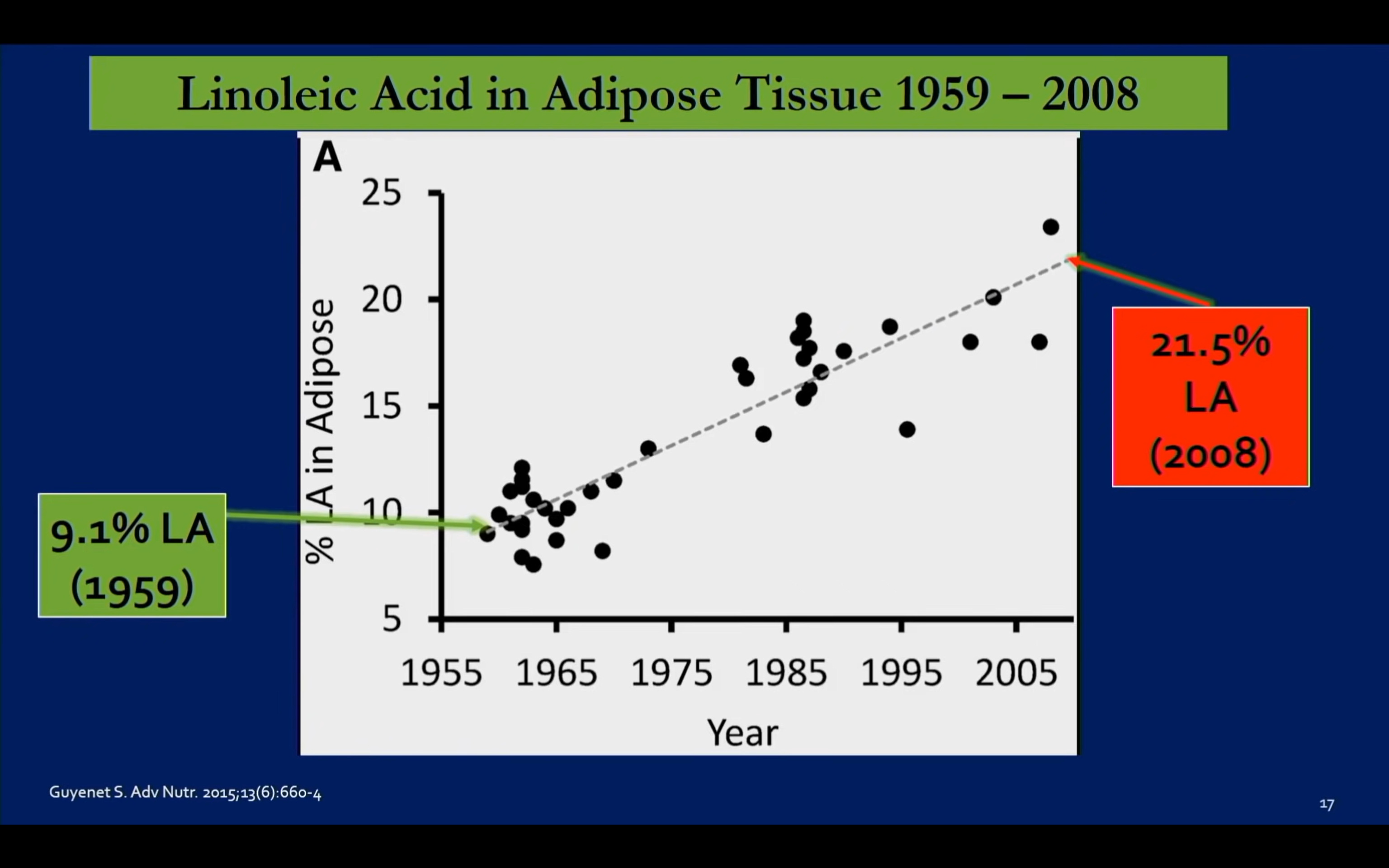
This is a massive dietary shift and is particularly relevant because polyunsaturated fats are less stable and more prone to oxidation than monounsaturated and saturated fats. In several animal models when all factors remained constant with the exception of omega 6 polyunsaturated fat intake we actually see that the fatty acid composition of the diet directly influences metabolic outcomes.(10) In fact it was found that despite isocaloric feeding, rats fed polyunsaturated fat as opposed to saturated fat gained more weight and that tissue omega 3 content actually seemed protective against weight gain. Since obesity is a potent predictor of insulin resistance, which is the hallmark of chronic disease, researchers conclude that this could have significant relevance to our treatment of type 2 diabetes. These results would also seem to fly in the face of the traditional school of thinking that calories are the sole determinant of weight gain. The energy in versus energy out model appears to have some cracks in the logic and perhaps simple over consumption of calories is not the reason for the increased rates of chronic disease as some suggest. If we zoom into the level of the mitochondria and look at energy production we can see how this could actually be possible.
A phospholipid called cardiolipin is a unique piece of the inner mitochondrial membrane comprising 15-20% of the total phospholipids in that membrane and plays many roles within the mitochondria. Perhaps most notably it interacts with the protein structures of the electron transport chain where energy in produced through a process called oxidative phosphorylation. It is possible that alterations in cardiolipin structure and oxidation level can impact how efficient the mitochondrion is at producing energy and thus contribute to many different disease processes which are now being theorized to begin with mitochondrial dysfunction such as diabetes, heart disease and even neurodegenerative diseases.(11) The mitochondria is the main site of reactive oxygen species generation and cardiolipin is particularly prone to oxidation both because of its unsaturated nature and location in the mitochondria. How does this pertain to PUFA intake and the question of whether these unsaturated oils are actually heart healthy as they claim to be? Well more important than weight gain is the ability of diets high in omega 6 polyunsaturated oils to induce inflammation and lipid peroxidation. In a simple but elegant experiment done on rats with high sunflower oil intake it was found that a “diet rich in omega-6 PUFA for only 4 weeks instigates mitochondrial nitrosative damage and causes cardiac dysfunction.(12)” This was specifically caused by the oxidation and remodeling of the cardiolipin phospholipid. This event also caused an opening in the mitochondrial permeability transition pore(mPTP) which along with ATP synthase and cardiolipin helps to maintain the proton gradient necessary for the efficiency of oxidative phosphorylation. With the increase in the mPTP permeability comes the uncoupling of oxidative phosphorylation and decreased energy production.(11)
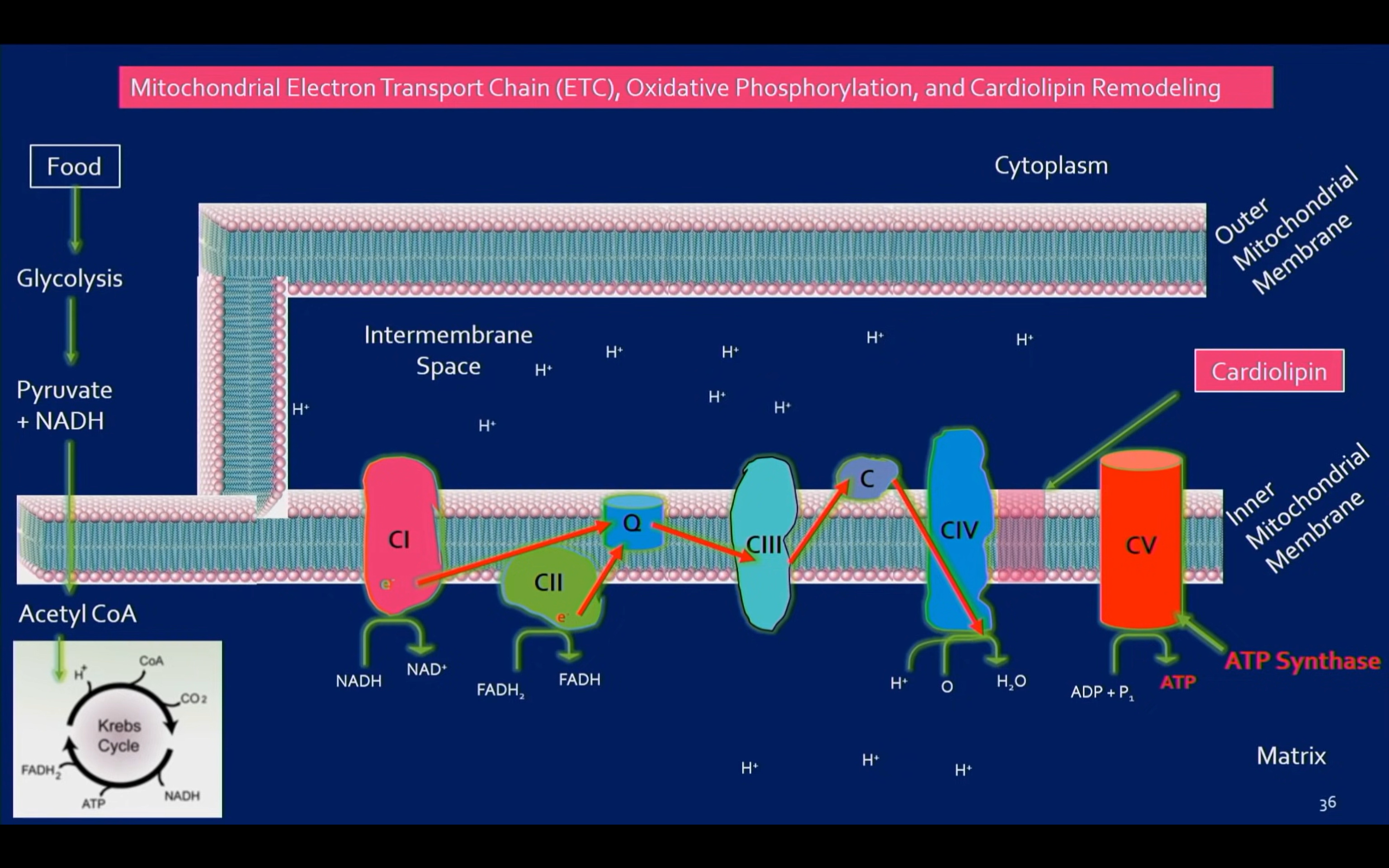
In fact total phospholipid was reduced by about 3 fold in the high PUFA diet. The rats fed a diet rich in sunflower oil had a 32% reduction in cardiac output as well…after only 4 weeks. While the studies I have discussed here are animal studies one does have to consider the potential that this pathology could occur in humans as well as we have made such a dramatic alteration to our diet and began consuming higher amounts of polyunsaturated fatty acids than we could ever get in nature consuming foods in their true whole form.
I also want to touch briefly on trans fatty acids. These fats are produced by a process of hydrogenation or adding hydrogen atoms to a liquid vegetable oil making them solid at room temperature and helping to improve shelf stability.(13) There is little debate any longer as to the damaging effects of these types of fats. As little as a 2% increased intake from trans fats has been associated with a 23% increase in heart disease risk. They also have a negative effect on human lipid profiles. They tend to both lower HDL and raise LDL. The worst and perhaps final word on trans fats is that they have become more and more difficult to avoid. Despite the establishment of an upper limit in foods by the FDA, the food industry has gotten clever. Foods are allowed to contain 0.5g trans fat per serving and still be considered trans fat free. So what is being done to avoid the negative connotation of a product containing trans fats is the reduction in serving size to a level that contains below the 0.5g amount. This allows foods to be labeled “trans fat free” even though they absolutely do contain them. Often the serving size is so low that it is not hard then to consume far beyond the recommended daily intake set by the AHA of 2g of trans fat per day.(14) The only effective way to avoid these fats is to read labels and stop consuming anything with hydrogenated or partially hydrogenated written on the label.
Another piece of this puzzle that is often written about is the omega 6:3 ratio of our diets and thus of our cells. This is an excellent proxy for inflammation. It is estimated that ancestral humans maintained between a 1:1-4:1 ratio even with the wide range of macronutrient compositions of their diets. The common theme is that no industrial seed oils were present to artificially raise the omega 6 component. Today humans are closer to 15:1 or in some cases even higher with a highly processed food diet. This creates a pro inflammatory environment and one perfect for pathologies to develop. Asthma for instance can have varied outcomes based on the omega 6:3 ratio. At 10:1 we see far worse outcomes than if we get closer to 5:1.(15) This is a profound change simply based on diet. Bringing this ratio down to 4:1 showed as much as a 70% reduction in total mortality. While I am an advocate of diets lower in carbohydrate in total it cannot be overlooked that some populations do just fine on a high carbohydrate diet when omega 6 is at a physiologically appropriate level.
I admit it can be hard to square the advice that we have been given for decades since the introduction of the US dietary guidelines in the 1980s. The simplistic equation of saturated fat is bad and polyunsaturated fat is good is pervasive and has become “common knowledge”. However the evidence today does not support that common knowledge. In a 2015 systematic review of the literature on saturated, unsaturated and trans fats encompassing over 340,000 people found that saturated fats were not associated with type 2 diabetes, stroke or cardiovascular disease nor was it associated with all-cause mortality.(16) Trans fats however were associated with all-cause mortality and heart disease. If one looks through an evolutionary lens I think a different picture of saturated fat appears. The Masai warrior tribe for instance of Kenya and Tanzania eat a diet that consists almost entirely of the milk, meat and blood of their animals. 66% animal fat and about 40% of that fat is saturated.(17) The key here is that they only consume about 2% omega 6 fats and they have no heart disease. Yet the American Heart Association wants people to consume 5% or less of calories from saturated fat and increase PUFAs to protect against heart disease. If this were a case to be tried before a jury my closing statement would be this. In the most recent review of saturated fats just published as I write these words in June of 2020 it yet again calls into question the evidence against saturated fats. It found no beneficial effect on cardiovascular disease or all-cause mortality with the reduction of saturated fat and found a protective effect against stroke.(18) Concluding that the available evidence from RCTs and meta-analyses do not support the continued recommendations on limiting saturated fats because the down side of removing foods like dark chocolate, full fat dairy, eggs and unprocessed meats that are high in saturated fats far outweigh the good as these foods are full of complex nutrients of great benefit. I believe that part of the problem with these nutrient poor, calorically rich oils is that they also replace nutrient dense foods in the diet. In science we cannot simply explain away discordant data with the term paradox. Instead we must revisit the hypothesis that saturated fat is inherently dangerous. Once upon a time in the not so distant past these types of fats were all humans had to consume and heart disease, diabetes and obesity were virtually unknown. Perhaps if we take a step back and look at nutrition from a biological and biochemical perspective the picture will become more about fact than fiction.
REFERENCES
1. Centers for Disease Control and Prevention. Chronic Disease in America. https://www.cdc.gov/chronicdisease/resources/infographic/chronic-diseases.htm. Accessed June 6, 2020.
2. Jones D, Podolsky S, Greene J. N Engl J Med 2012; 366:2333-2338
DOI: 10.1056/NEJMp1113569
3. James TN. Homage to James B. Herrick: a contemporary look at myocardial infarction and at sickle-cell heart disease: the 32nd Annual Herrick Lecture of the Council on Clinical Cardiology of the American Heart Association. Circulation. 2000;101(15):1874-1887. doi:10.1161/01.cir.101.15.1874
4. Weston A Price Foundation. The Rise and Fall of Crisco. https://www.westonaprice.org/health-topics/modern-foods/the-rise-and-fall-of-crisco/. Accessed June 20,2020.
5. Poti JM, Braga B, Qin B. Ultra-processed Food Intake and Obesity: What Really Matters for Health-Processing or Nutrient Content?. Curr Obes Rep. 2017;6(4):420-431. doi:10.1007/s13679-017-0285-4
6. Poti J, Mendez M, Ng SW, Popkin B. Is the degree of food processing and convenience linked with the nutritional quality of foods purchased by US households?, The American Journal of Clinical Nutrition. 2015;101(6):1251-1262. https://doi.org/10.3945/ajcn.114.100925
7. Knobbe C, Stojanoska M. The ‘Displacing Foods of Modern Commerce’ Are the Primary and Proximate Cause of Age-Related Macular Degeneration: A Unifying Singular Hypothesis. 2017. Medical Hypotheses;109:184-198.
8. Ford R, Faber M, Kunneke E, Smuts CM. Dietary fat intake and red blood cell fatty acid composition of children and women from three different geographical areas in South Africa. Prostaglandins Leukot Essent Fatty Acids. 2016;109:13-21. doi:10.1016/j.plefa.2016.04.003
9. Stephan J Guyenet, Susan E Carlson, Increase in Adipose Tissue Linoleic Acid of US Adults in the Last Half Century, Advances in Nutrition. 2015;(6)6:660–664. https://doi.org/10.3945/an.115.009944.
10. Pan DA, Storlien LH. Dietary Lipid Profile Is a Determinant of Tissue Phospholipid Fatty Acid Composition and Rate of Weight Gain in Rats, The Journal of Nutrition. 1993;123(3):512–519. https://doi.org/10.1093/jn/123.3.512.
11. Paradies G, Paradies V, Ruggiero FM, Petrosillo G. Role of Cardiolipin in Mitochondrial Function and Dynamics in Health and Disease: Molecular and Pharmacological Aspects. Cells. 2019;8(7):728. Published 2019 Jul 16. doi:10.3390/cells8070728
12. Ghosh S, Kewalramani G, Yuen G, et al. Induction of mitochondrial nitrative damage and cardiac dysfunction by chronic provision of dietary omega-6 polyunsaturated fatty acids. Free Radic Biol Med. 2006;41(9):1413-1424. doi:10.1016/j.freeradbiomed.2006.07.021
13. Clarke R, Lewington S. Trans fatty acids and coronary heart disease. BMJ. 2006;333(7561):214. doi:10.1136/bmj.333.7561.214
14. Remig V, Franklin B, Margolis S, Kostas G, Nece T, Street JC. Trans fats in America: a review of their use, consumption, health implications, and regulation. J Am Diet Assoc. 2010;110(4):585-592. doi:10.1016/j.jada.2009.12.024
15. Simopoulos AP. The importance of the ratio of omega-6/omega-3 essential fatty acids. Biomed Pharmacother. 2002; 56(8):365-379. doi:10.1016/s0753-3322(02)00253-6
16. de Souza RJ, Mente A, Maroleanu A, et al. Intake of saturated and trans unsaturated fatty acids and risk of all cause mortality, cardiovascular disease, and type 2 diabetes: systematic review and meta-analysis of observational studies. BMJ. 2015;351:h3978. doi:10.1136/bmj.h3978
17. Mann GV, Spoerry A, Gray M, Jarashow D. Atherosclerosis in the Masai. Am J Epidemiol. 1972;95(1):26-37. doi:10.1093/oxfordjournals.aje.a121365
18. Astrup A, Magkos F, Bier D, et al. Saturated Fats and Health: A Reassessment and Proposal for Food-based Recommendations: JACC State-of -the-Art Review. 2020. DOI: 10.1016/j.jacc.2020.05.077